
The Ultimate Puente del Inca History Guide for Your Mendoza Trip
Welcome to the high Andes of Argentina. This Puente del Inca history guide explores one of the most curious wonders in South America. Nestled near the border with Chile, this natural bridge holds centuries of secrets. It is famous for its vibrant orange and yellow mineral deposits. Visitors often combine this stop with a visit to the top attractions near Mendoza for a full mountain experience. You will find ancient legends, ruins of luxury, and stunning geological formations here.
Quick Planning Picks for Puente del Inca
Planning a trip to the mountains requires a bit of strategy. The weather changes fast at high altitudes. Most visitors depart early from the city. Here are several quick picks to help you decide on your priorities for the day.
- Best Overall: The main viewpoint of the natural bridge and the sulfurous hot springs.
- Best for Families: The Horcones trail at Aconcagua Provincial Park.
- Best Rainy Day: Exploring the historic Bóvedas de Uspallata.
- Best Free Activity: Viewing the bridge and the survivors' chapel from the pedestrian path.
Exploring Puente del Inca History: 12 Must-See Highlights
This section is the core of our Puente del Inca history guide. Each item offers a glimpse into the past and present of the region. Many sites are part of the vast UNESCO-protected Qhapaq Ñan road system. Please respect the barriers while exploring. Most of these sites are easily reached via National Route 7.
-
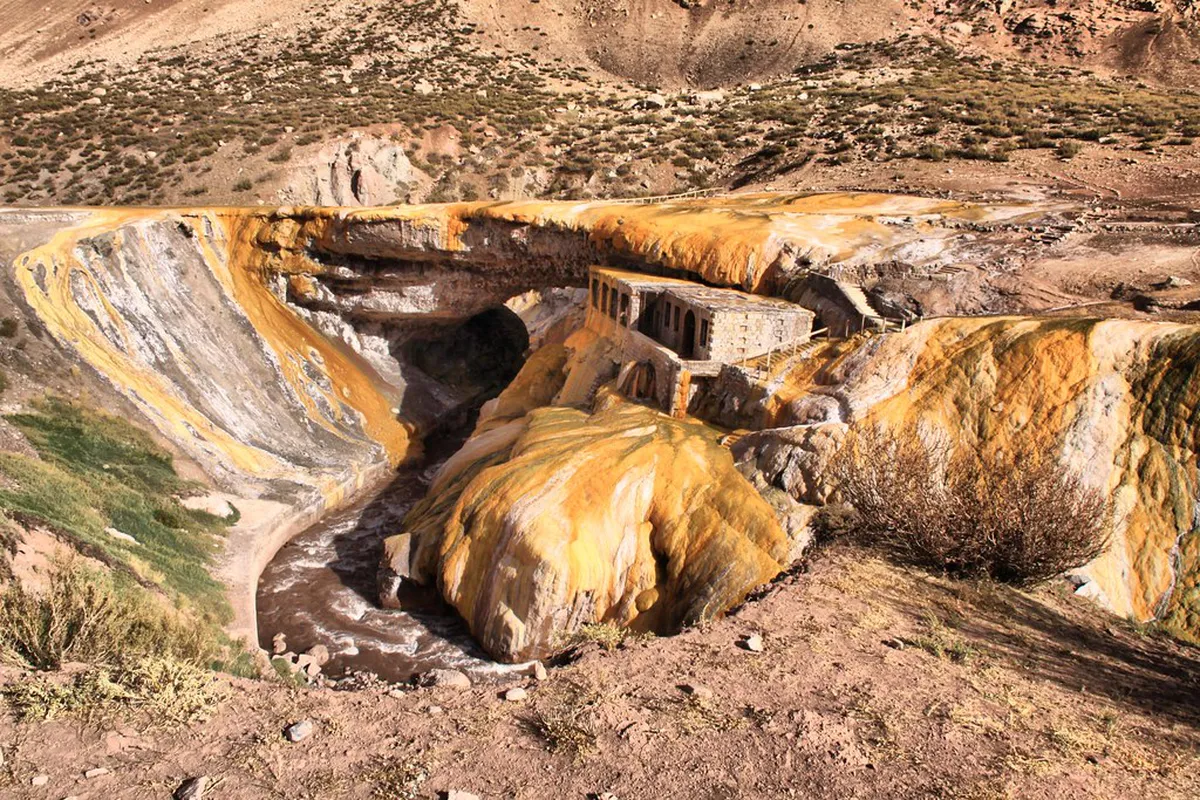
Name: The Natural Rock Bridge
Type: sight
Why go: This is the main highlight shaped by the Las Cuevas River and mineral springs.
Best for: Nature lovers and geology fans.
Where: Puente del Inca village.
Time: 20–30 minutes.
Cost: Free.
Getting there: Walk from the roadside parking area.
Tip: Look for the petrified objects left by locals near the mineral water. -
Name: Ruins of the Hotel Puente del Inca
Type: experience
Why go: Once a luxury thermal hotel, an avalanche destroyed it in 1965.
Best for: History buffs.
Where: Under the natural bridge.
Time: 15 minutes.
Cost: Free (viewing only).
Getting there: Viewable from the main viewing platform.
Tip: You cannot enter the ruins for safety reasons. -
Name: Chapel of Puente del Inca
Type: sight
Why go: It is the only building that survived the tragic 1965 mudslide.
Best for: Architecture fans.
Where: Adjacent to the hotel ruins.
Time: 10 minutes.
Cost: Free.
Getting there: Short walk from the souvenir stalls.
Tip: It makes for a hauntingly beautiful photo against the mountain backdrop. -
Name: Qhapaq Ñan (The Great Inca Road)
Type: experience
Why go: This site was a crucial stop on the Inca road network across the Andes.
Best for: Cultural explorers.
Where: Surrounding trails near the bridge.
Time: 1 hour.
Cost: Free.
Getting there: Guided tours explore the ancient trail segments.
Tip: Read the informational plaques to understand the ancient engineering. -
Name: Horcones Trail (Aconcagua Entrance)
Type: sight
Why go: Get a close view of the highest peak in the Western Hemisphere.
Best for: Hikers.
Where: Aconcagua Provincial Park, 2km from the bridge.
Time: 1–2 hours.
Cost: Small entry fee for the interpretive circuit.
Getting there: Drive or walk from Puente del Inca.
Tip: Check the park status in winter as snow may block the trail. -
Name: Cemetery of the Mountaineers
Type: sight
Why go: A sobering monument to climbers who lost their lives on Aconcagua.
Best for: Reflection and local history.
Where: 1km east of Puente del Inca.
Time: 20 minutes.
Cost: Free.
Getting there: Roadside access on Route 7.
Tip: It offers a poignant perspective on the power of the Andes. -
Name: Las Cuevas Village
Type: sight
Why go: The final village before reaching the Chilean border, featuring Alpine-style architecture.
Best for: Scenic photos.
Where: 15km past Puente del Inca.
Time: 45 minutes.
Cost: Free.
Getting there: Continue driving west toward the international tunnel.
Tip: It belongs to the highest part of the Mendoza mountain circuit. -
Name: Cristo Redentor de los Andes
Type: sight
Why go: A massive bronze statue symbolizing peace between Argentina and Chile.
Best for: Panoramic views.
Where: Top of the old mountain pass.
Time: 1 hour.
Cost: Free.
Getting there: Steep dirt road from Las Cuevas (summer only).
Tip: The road is extremely curvy and requires careful driving. -
Name: Bóvedas de Uspallata
Type: sight
Why go: Historic kilns used for mineral processing during the colonial era.
Best for: History enthusiasts.
Where: Uspallata Valley.
Time: 45 minutes.
Cost: Small donation suggested.
Getting there: 1 hour drive toward Mendoza from the bridge.
Tip: Visit the onsite museum for local archeological finds. -
Name: Picheuta Bridge
Type: sight
Why go: A historic stone bridge used by General San Martín’s army in 1817.
Best for: Military history fans.
Where: Near Uspallata.
Time: 20 minutes.
Cost: Free.
Getting there: Roadside stop marked on Route 7.
Tip: It is a great spot to stretch your legs during the drive. -
Name: Potrerillos Dam Viewpoint
Type: sight
Why go: A massive turquoise lake surrounded by snowy mountains.
Best for: Photography.
Where: Potrerillos Reservoir.
Time: 30 minutes.
Cost: Free.
Getting there: Stop at the tunnel viewpoints on the way back to the city.
Tip: The best light is usually in the late afternoon. -
Name: Cacheuta Thermal Baths
Type: activity
Why go: Natural hot springs that offer relaxation after a long mountain day.
Best for: Couples and families.
Where: Cacheuta village.
Time: 4 hours.
Cost: Entrance fees vary by day and season.
Getting there: Take the Pan-American highway from Mendoza.
Tip: Book in advance during weekends as it fills up quickly.
Essential Tips for the High Andes Circuit
Travelers should prepare for thin air. Puente del Inca is over 2,700 meters above sea level. Drink plenty of water and avoid heavy meals before your ascent. If you feel dizzy, take short breaks and move slowly. This area is a highlight for anyone horseback riding in the Andes during the summer season.
Dress in layers, even in January. The wind can be very cold in the high mountains. Sunscreen is also essential because the UV rays are strong. If you are driving yourself, check the road status at the Mendoza Tourism official portal. Snow can sometimes block the pass in winter.
Nearby Historical Stops on Route 7
Your journey through history does not end at the natural bridge. The surrounding Uspallata Valley contains ancient petroglyphs and colonial outposts. For those with more time, the Villavicencio Nature Reserve offers a different historical perspective. It features a famous old hotel and mineral springs.
Consider spending a full day on Route 7. You can visit the military ruins and then enjoy a local meal in the village. Many restaurants serve typical regional trout and mountain stew. This area offers a unique mix of natural power and human endurance. It remains a highlight of Mendoza, Argentina for all visitors.
Frequently Asked Questions
Can you walk across the Puente del Inca bridge?
No, you cannot walk across the bridge. It is strictly closed to the public to prevent erosion and for safety reasons. You can see the entire structure clearly from several nearby viewpoints. These platforms offer great angles for photography and historical appreciation.
Why is Puente del Inca orange?
The orange color comes from a high concentration of minerals in the thermal water. Sulfur, iron, and calcium permeate the rock over time. These minerals create a natural petrification process. Objects left in the water will eventually turn into stone-like curiosities for the locals.
Is it worth visiting Puente del Inca in winter?
Yes, it is very beautiful in winter. However, heavy snow can occasionally close the highway. Always check the weather forecast before leaving Mendoza city. The sight of the orange bridge against white snow is absolutely stunning and worth the effort.
The High Andes are a must-see for any visitor to Argentina. We hope this Puente del Inca history guide helps you plan a memorable trip. From ancient Inca trails to the ruins of a luxury era, the site is truly unique. Remember to combine your mountain visit with other regional tours for the best experience. Safe travels through the mountains!
Official resources
Use these sources for official schedules, tickets, routes, and updates.
- Mendoza Tourism — unverified: Official provincial tourism board.
- City of Mendoza — unverified: Official city government portal.
- Argentina Travel — unverified: National tourism authority.
- UNESCO World Heritage Centre — unverified: International heritage authority for Qhapaq Ñan.
- Lonely Planet — unverified: Leading international travel publisher.
- Aeropuertos Argentina 2000 — unverified: Official operator of Mendoza International Airport.