
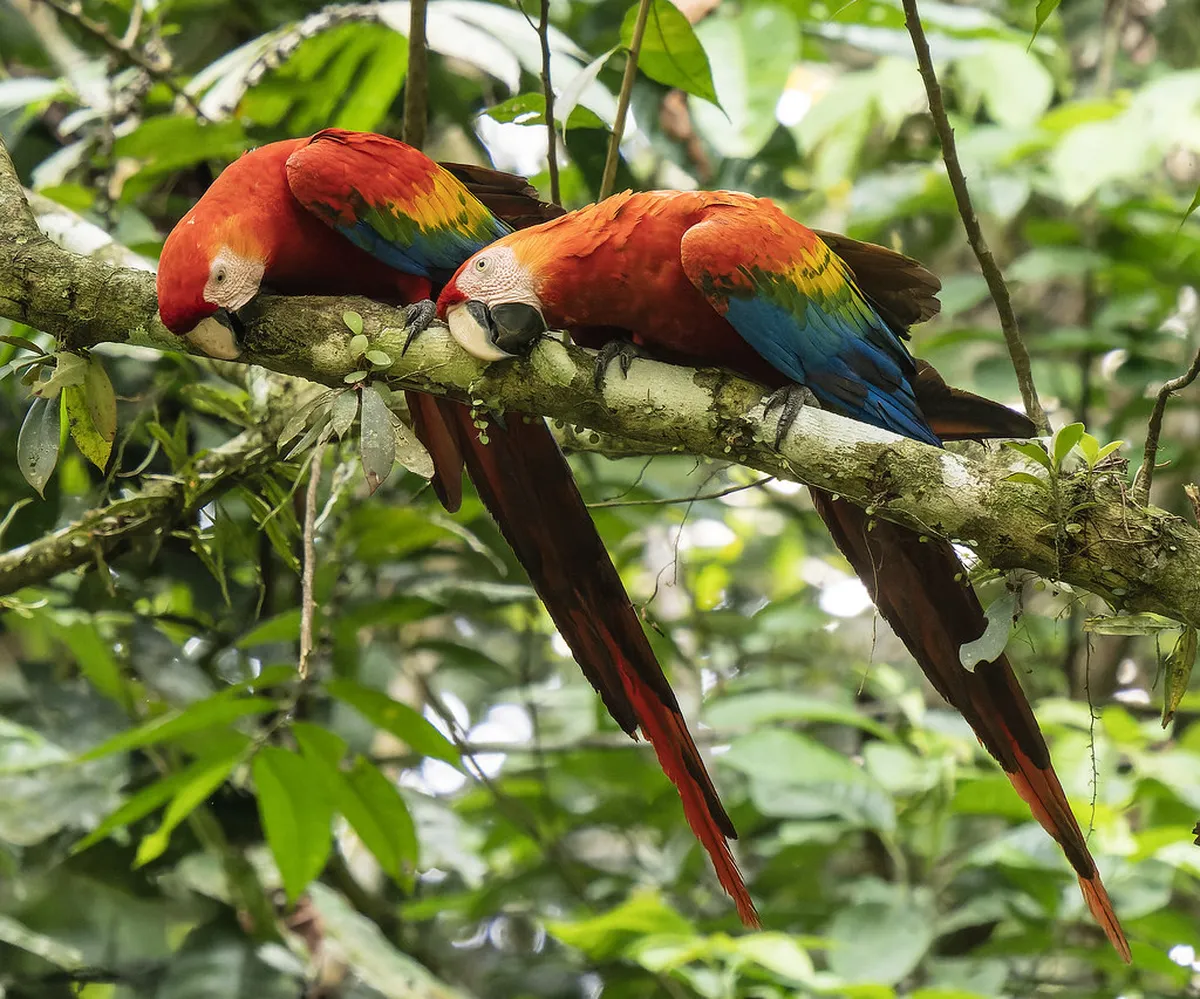
Top Macaw Clay Lick Trips Near Puerto Maldonado, Peru
Experience the sheer beauty of the Amazon on one of the many Macaw clay lick trips available. Puerto Maldonado serves as the main gateway to these spectacular wildlife displays. This jungle city in Puerto Maldonado sits at the confluence of major rivers. Here, thousands of birds gather daily to eat mineral-rich clay.
Seeing hundreds of scarlet and green-winged macaws take flight is a bucket-list experience. These tours often start before sunrise to catch the morning activity. It is a rare chance to see wild nature at its most vibrant. You will learn about biology while enjoying the deep jungle atmosphere.
This guide highlights the most reliable spots for birders and photographers. We cover everything from short trips to deep-jungle adventures. Prepare to see one of the most colorful spectacles on Earth.
Understanding Macaw Clay Lick Trips
A macaw clay lick, or "colpa," is a vertical riverbank rich in sodium and minerals. Scientists believe macaws eat this clay to help neutralize toxins from seeds. This behavior creates a social hub for many bird species. Most Macaw clay lick trips take place in the Tambopata National Reserve which protects these sites.
Guests usually depart from their lodge at 4:30 AM or 5:00 AM. You will travel by motorized boat as the rainforest wakes up. Seeing the jungle from the water is a peaceful experience. Once at the lick, you will wait quietly in a blind or on a beach.
The birds are very sensitive to noise and movement. If a hawk or predator appears, they may fly away instantly. If they feel safe, they descend in waves to the clay. The noise of hundreds of squawking macaws is truly unforgettable.
10 Best Macaw Clay Lick Trips Near Puerto Maldonado
Here are the top-rated sites and experiences for your journey. Many of these require multi-day stays at specialized jungle lodges.
- Quick Pick: Best Overall: Chuncho Clay Lick (Colpa Chuncho).
- Quick Pick: Best for Families: Sandoval Macaw Observation.
- Quick Pick: Best for Photographers: Tambopata Research Center.
- Quick Pick: Best Free/Budget: La Pastora Parrot Lick.
-
Name: Chuncho Clay Lick (Colpa Chuncho)
Type: activity
Why go: This is arguably the most famous and reliable lick in the world. It often hosts the largest concentration of macaws.
Best for: High-density bird sightings.
Where: Upper Tambopata River.
Time: 1 full day or part of 3-day tour.
Cost: $160 - $350 (usually part of lodge package).
Getting there: 4-hour boat ride from Puerto Maldonado.
Tip: Visit during the dry season for the largest numbers. -
Name: Colorado Clay Lick (Colpa Colorado)
Type: activity
Why go: Known for long-term scientific research on parrot behavior. It offers incredible views of Scarlet and Red-and-Green macaws.
Best for: Learning about conservation science.
Where: Deep inside Tambopata.
Time: 4+ days recommended.
Cost: $500+ (multi-day package).
Getting there: Extended boat journey from the city.
Tip: Book a trip that includes an evening talk by local biologists. -
Name: Tambopata Research Center Hide
Type: experience
Why go: It is one of the most remote lodges in South America. The blinds are perfectly positioned for close-up photography without disturbing the birds.
Best for: Professional photographers.
Where: Extreme southern Tambopata.
Time: 5 days.
Cost: $800 - $1,200.
Getting there: Multi-leg boat trip through wild zones.
Tip: Bring a lens with at least 400mm focal length. -
Name: Heath River Wildlife Center Lick
Type: day trip
Why go: Located on the border between Peru and Bolivia. It is one of the few places where you can see macaws and tapirs at the same lick.
Best for: Seeing rare mammal and bird combinations.
Where: Heath River.
Time: 4-day specialized trip.
Cost: $600 - $900.
Getting there: Travel down the Madre de Dios River boat routes.
Tip: Wear neutral colors to blend into the blind. -
Name: El Gato Clay Lick
Type: activity
Why go: It is closer to the city than the deep reserve licks. This makes it a great option for those with limited time.
Best for: Budget-conscious travelers.
Where: Lower Tambopata.
Time: Half-day or overnighter.
Cost: $100 - $200.
Getting there: 1.5-hour boat ride.
Tip: It is less crowded than Chuncho but fewer birds appear here. -
Name: Sandoval Macaw Observation Point
Type: experience
Why go: While not a massive riverbank lick, the trees at Lake Sandoval are home to nesting Blue-and-Yellow macaws.
Best for: Seeing macaws in a serene lake setting.
Where: Lake Sandoval.
Time: Half-day.
Cost: $40 - $70.
Getting there: Boat plus a 3km forest walk.
Tip: Go during the late afternoon for the best light on the palms. -
Name: Taricaya Ecological Reserve Macaw Rescue
Type: experience
Why go: See macaws being rehabilitated for release. The Taricaya Ecological Reserve also features a massive canopy walkway.
Best for: Ethical tourism and high-altitude views.
Where: Lower Madre de Dios River.
Time: 1 full day.
Cost: $80 - $150.
Getting there: 1-hour boat ride from town.
Tip: Combine this with the Amazon canopy walk for a bird's-eye view. -
Name: Bahuaja-Sonene Remote Lick
Type: activity
Why go: This park is rarely visited by tourists. It offers a raw and wild macaw experience far from other boats.
Best for: Hardcore adventurers.
Where: Bahuaja-Sonene National Park.
Time: 6-8 days.
Cost: $1,000+.
Getting there: Private expedition boat.
Tip: You must be comfortable with basic camping. -
Name: La Pastora Parrot Lick
Type: sight
Why go: This is a small lick very close to the city. It mostly attracts parrots and parakeets rather than giant macaws.
Best for: A quick morning activity before a flight.
Where: Near Puerto Maldonado outskirts.
Time: 2-3 hours.
Cost: $30 - $50.
Getting there: Taxi or motor-tricycle.
Tip: Check reports of recent sightings before going; it is seasonal. -
Name: Manu National Park Border Lick
Type: day trip
Why go: Seeing the licks near the UNESCO World Heritage border of Manu. It is world-renowned for biodiversity.
Best for: Completing a regional birding list.
Where: Manu Biosphere Reserve border area.
Time: Multi-day trip from Puerto Maldonado.
Cost: $700+.
Getting there: Long boat or car journey.
Tip: Best visited as part of a longer Manu expedition.
Essential Planning for Your Birdwatching Adventure
Birdwatching requires patience and the right equipment. You will need a good pair of binoculars (8x42 is best). Most Macaw clay lick trips involve long periods of waiting. Bring a small portable stool or check if the tour provides chairs.
Dress in layers to handle the changing jungle temperatures. The early morning boat ride is surprisingly cold. Wear long sleeves and pants to protect against mosquitoes. Light, breathable fabrics like linen or moisture-wicking synthetics work best.
Hydration and snacks are vital for long mornings. Most tours provide breakfast, but extra water is always smart. Don't forget a waterproof bag for your electronics. The Amazon rain can start without any warning.
Best Seasons and Travel Logistics
Timing is everything for macaw sightings. You should research the best month for macaw clay lick tours before booking. Typically, from May to September, the weather is driest and sightings are most frequent. During heavy rain, bird activity on the clay decreases significantly.
You will likely fly into Father Aldamiz International Airport. This airport connects directly to Lima and Cusco. Most lodges will meet you at the airport for transport. Visit the Madre de Dios tourism section for official travel updates.
If you have extra time, consider other top attractions near Puerto Maldonado. The local market is a great place to see jungle fruits. Always carry some cash in Soles for small purchases in town. Safety is generally good, but always travel with reputable agencies.
Frequently Asked Questions
What is the best time of day for Macaw clay lick trips?
The best time is early morning, usually between 5:30 AM and 9:00 AM. Macaws arrive at dawn to socialize and feed before the heat of the day. If you arrive late, you may miss the main event as birds disperse into the forest.
How do I know where to see macaws in Puerto Maldonado?
Knowing where to see macaws in Puerto Maldonado depends on your budget and time. Chuncho is best for mass sightings in Tambopata. For those staying at Lake Sandoval, palm trees offer great views of nesting pairs.
Are macaw clay licks ethical to visit?
Yes, if you go with responsible operators who use blinds. These structures keep humans hidden so birds don't feel threatened. Choosing lodges that support conservation helps protect these vital habitats from logging and mining.
Macaw clay lick trips offer a unique glimpse into the wild heart of Peru. Whether you choose the massive banks of Chuncho or the rescue center at Taricaya, you will be amazed. Remember to pack your patience and a good camera. For more planning help, see our guide on Tambopata National Reserve tours. Book your 2026 trip soon to secure the best lodge availability.
Official resources
Use these sources for official schedules, tickets, routes, and updates.
- Peru Travel — Official national tourism board. (unverified)
- UNESCO World Heritage Centre — Manu National Park World Heritage listing. (unverified)
- Lonely Planet — Leading travel editorial source. (unverified)
- Aeropuertos del Perú — Official airport operator. (unverified)
- Britannica — High-authority encyclopedia. (unverified)
- Mapcarta — Geographic and mapping authority. (unverified)